Pyhä-Luosto National Park offers hiking trails all year round

Majestic fells, deep gorges, and ancient forests captivate every traveler. You can choose an easy nature trail, spend the whole day outdoors, or set off on a short hike. Along the way, rest stops offer a chance to relax – and perhaps you’ll meet a curious Siberian jay at a lean-to. Pyhä-Luosto National Park is a protected area established as a natural landmark. Its nature and species are among the most significant in Finland. It’s important to familiarize yourself with the park in advance and prepare carefully for your trip by reading the guidelines and respecting nature during your visit.

Rules and instructions

The core of Pyhä-Luosto National Park is formed by Finland’s southernmost fell range, which is 2 billion years old. The southernmost part of the chain, Pyhätunturi, is characterized by steep slopes covered with sharp-edged boulder fields and deep gorges. These gorges were carved by meltwaters during the ice ages and divide the fell ridge into separate peaks. The fells consist mainly of metamorphic rocks, conglomerates, and quartzites.
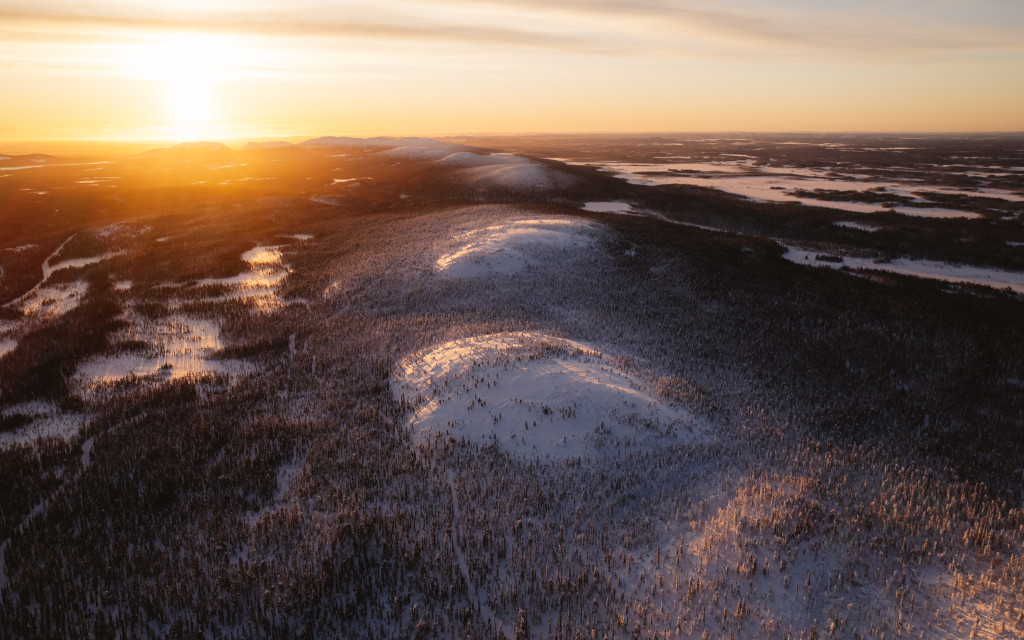
Pyhä-Luoston kansallispuisto tunturijono

History of Pyhä-Luosto and Its National Park


The national park has a long and meaningful history. Pyhätunturi National Park was established in 1938, and in 2005 it was expanded to include the nearby Luosto area, forming today’s Pyhä-Luosto National Park. Long before this, the region was an important settlement area where people hunted, fished and gathered natural resources from prehistoric times onward.
The forests southwest of Ukko-Luosto and Lampivaara have remained untouched by the large-scale logging of the 19th and early 20th centuries, and some of the trees are now up to 400 years old. Luosto is famous for its impressive old pine forests, while Pyhätunturi is known for its remarkable geology and the history of the Forest Sámi who once lived in the area.
For the Forest Sámi, Pyhätunturi was—just as its name suggests—a sacred fell. According to oral tradition, they visited places such as the Uhriharju seida to ask the local spirits for good hunting luck, offering parts of reindeer or wild forest reindeer as gifts. Pyhätunturi was an important hunting ground for wild forest reindeer and later became a centre for reindeer herding.
Today, Pyhä-Luosto National Park serves many purposes: nature conservation, local livelihoods, outdoor recreation and sustainable tourism. It remains a place where ancient traditions, geological wonders and modern nature experiences meet.


National park services, trails, activities and visitor centre

VisitPyhaLuosto-talviretkeily

Winter day‑hiking trails

Nature enchants throughout the winter — in the brightness of crisp frost, in the soft light of snowfall, in the midwinter dimness, and on the sunlit spring snow. The trail to Tunturiaapa partly follows a maintained winter cycling route, and during peak season the paths become well‑packed, making them easy to walk with winter boots
Two hikers in the national park during summer

Day-hiking trails in summer and autumn

Some of Pyhä-Luosto’s most stunning day-hiking trails include the ascent to Noitatunturi, the Ukko-Luosto loop, and the Isokuru gorge trail
VisitPyhaluosto_retkeily_syksy

Pyhä-Luosto hiking trail

Hike from the depths of ancient gorges to the heights of open fell tops, diving at times into primeval forests as you follow the chain of age‑old fells across Pyhä‑Luosto National Park
Pyha-maisematupa

Rental and wilderness huts for overnight stays

The national park’s two open wilderness huts and three reservable huts are designed for overnight stays during your hike. You can also camp in your own tent in the surroundings of the open huts, day huts, traditional Lappish kota shelters, lean‑tos and cooking shelters
VisitorsCentreNaava

Naava Visitor Centre – nature exhibition, guided information and hiking advice

At the Pyhä-Luosto Naava Visitor Centre, you’ll find an accessible nature exhibition suitable for all ages. The customer service desk provides up‑to‑date tips for your visit, and at the NaavaShop you can pick up small souvenirs and essentials
moutainbikin_pyhaluosto

Mountain biking through the national park

Pyhä-Luosto’s mountain biking trails take you deep into the landscapes of the national park.
Crosscountry_skiing_winter_PyhaLuosto_Lampivaara10.jpg

Maastohiihto

Kansallispuistossa ja sen ympäristössä on 150km maastohiihtolatuja.
pyhaluosto_talvipyoraily

Talvipyöräily

Kansallispuistossa ja sen ympäristöstä löytyy Pyhältä ja Luostolta talvipyöräilyreittejä
VisitPyhaLuosto-laavu

Tulipaikat ja reittikartta

Pyhä-Luoston karttapalvelu löytyy osoitteesta pyhaluostotrails.fi sekä kansallispuiston omasta luontoon.fi sovelluksesta.

Day Hiking and Walking Trails in Pyhä‑Luosto


Below you will find the Pyhä‑Luosto area trails available in Outdooractive, both within the national park and outside it. More information about the trails can also be found at pyhaluostotrails.fi and in Metsähallitus’ Luontoon.fi 

Please note that most of these trails are only safely accessible during the summer and autumn seasons. If you are looking for winter routes, please read more about snowshoeing.

Pyhä-Luosto National Park unique nature - Stories, Culture and Silence

Pyhä-Luosto National Park is Finland’s oldest protected area, a place where volcanic history, Sámi heritage, and iconic fell scenery meet. It offers everything natureloving travellers appreciate: serenity, space, clean air, and well-marked trails that make exploring safe and enjoyable.

The nature of Pyhä-Luosto National Park is dominated by high fell tops and deep gorges. At the foot of the fells spread ancient forests and wide, open aapa mires that provide a home for a rich variety of animals and plant species. In these forests, you may encounter Arctic flora, several northern bird species, and reindeer, as well as bears and wolves that roam the wilderness.

 
isokuru_pyhaluosto.jpg

Finland’s deepest gorge, Isokuru

A special feature of Pyhätunturi is the largest and best-known gorge Isokuru, which plunges 220 metres deep. These gorges were formed by meltwater erosion during the Ice Ages and divide the fell ridge into separate peaks. The Karhunjuomalampi trail and the Noitatunturi summit trail—pass through this impressive gorge. Place is open only the snow-free season!
pyhankasteenputous_TeemuKuisma (2).jpg

Pyhänkasteenlampi ja Pyhänkasteenputous

The Pyhänkasteenputous waterfall drops into the pond from 17 metres. The names (literally: pond of holy baptism and waterfall of holy baptism) tell us about an encounter of religions: according to oral tradition, a priest called Esaias Fellman baptised forest Sámi people en masse in the summer of 1648 at their old place of worship called “seita”. Place is open only the snow-free season!
Pyhä-Luoston kansallispuisto aaltokivi

Ripple mark rocks

You can see petrified traces left by the waves of an ancient sea in many places on the surface of quartzite boulders. These ripple mark rocks can be spotted for example in the Isokuru gorge and Noitatunturi.
Uhriharju-Netti-insta-001.jpg

Uhriharju

Uhriharju rises steeply at the end of Isokuru. Long, steep stairs lead from Isokuru to its flat summit, where fenced viewpoints offer impressive scenery. The area is extremely sensitive, so visitors must stay on the marked route and structures. The name Uhriharju comes from the ancient offering traditions of the Forest Sámi. Place is open only the snow-free season!
Visitpyhaluosto_noitatunturi_kesa

Noitatunturi "Witch fell"

The highest peak of the Pyhä-Luosto fell range stands 540 metres above sea level. The rugged Noitatunturi fell is said to be an old sacred place for the forest Sámi people, called “seita”, and it was previously known as Seitatunturi (literally: seita fell). Hiking trail is open only the snow-free season!
VisitPyhaLuosto_Pyhaluostonationalpark_Lehrke_twins_

The wondrous world of northern mires

The mires of the national park are mainly large aapa mires that combine several mire types. The aapa mire zone, which extends from Pyhätunturi to Ukko-Luosto, alternates between watery, meadow-like open fens and drier pine mires with stunted trees.
A siberian jay is sitting on a branch.

The Siberian jay – the bird of the national park

The Siberian jay (Perisoreus infaustus) featured on the logo of the Pyhä-Luosto National Park is the smallest corvid in Finland. It is a familiar sight near rest spots, where it watches hikers curiously, as is typical of the species.
Visitpyhaluosto_tunturikasvi

The southernmost fell plants in Finland

In the terrain of Finland’s southernmost major fell area, you’ll find small patches of mountain birch forest and rare Arctic plant species such as sielikkö (Arctic bellflower), kurjankanerva (Lapland azalea) and riekonmarja (Arctic bearberry). The national park is an important conservation area on a Northern European scale: 80 species of polypores have been recorded here, 11 of which are nationally threatened.
VisitPyhaLuosto_retkeily

Pristine ancient forests

The most ecologically valuable element of Pyhä-Luosto’s arctic nature is the dense belt of ancient forest that covers the lower slopes of the fells. These old-growth forests are home to many species that depend on untouched woodland. Most of the trees are over 250 years old, and in the Luosto area some stands are more than 400 years old.
VisitPyhaLuosto Pyhä reindeer farm 2 (1).jpg

Reindeer and Reindeer Herding

In Pyhä-Luosto, you are hiking within a reindeer herding area — the home of the reindeer and the workplace of the herders. Here, reindeer are free to roam and graze throughout the year. They are shy animals and usually avoid people, but encountering humans can cause them unnecessary stress. During the late spring calving season, it is especially important to keep a good distance from reindeer.
VisitPyhaLuosto-amestistikaivos

Lampivaara Amethyst

Rare violet quartz—known as amethyst—has been found in Lampivaara, Luosto. The Lampivaara Amethyst Mine operates year‑round within the national park and is one of the few gemstone mines in the world that welcomes visitors on guided tours.
Luosto_maisematupa_metshallitus_Jaakko_Posti

Ukko-Luosto Scenic Hut

The Ukko‑Luosto Scenic Hut is a modern day hut offering a place to rest with spectacular views, year‑round and at any time of day. After dark, you can admire the starry sky or watch for the northern lights from the warmth of the hut through its large panoramic windows. The experience is complemented by a small exhibition, Tunturin valomaisemat (‘Fell Lightscapes’), inside the hut.
VisitPyhaLuosto_Luosto Electric Fatbike

Luosto’s enchanting snow‑laden winter forests

In winter, the thick, heavy crown snow that accumulates on the trees transforms the fell landscape into a gallery of stunning natural snow sculptures.
VisitPyhaLuosto_Ukko-Luosto_Lehrke_Twins_Finnland-94.jpg

Ukko-Luosto Summit

On the top of Luosto’s highest fell, more than 500 metres above sea level, you can feel the winds of the summit and admire breathtaking views. To the south, the chain of fells and hills of the national park stretches all the way to Pyhä, while to the west, a captivating mosaic of aapa mires and ancient forests unfolds below.
Visitor's checklist

The outdoor activities in the Pyhä-Luosto National Park are guided with the rules and regulations. When getting around in nature, let’s show respect for it.

outdoor_pyha_luosto