Majestic fells, deep gorges, and ancient forests captivate every traveler. You can choose an easy nature trail, spend the whole day outdoors, or set off on a short hike. Along the way, rest stops offer a chance to relax – and perhaps you’ll meet a curious Siberian jay at a lean-to. Pyhä-Luosto National Park is a protected area established as a natural landmark. Its nature and species are among the most significant in Finland. It’s important to familiarize yourself with the park in advance and prepare carefully for your trip by reading the guidelines and respecting nature during your visit.
Rules and instructions
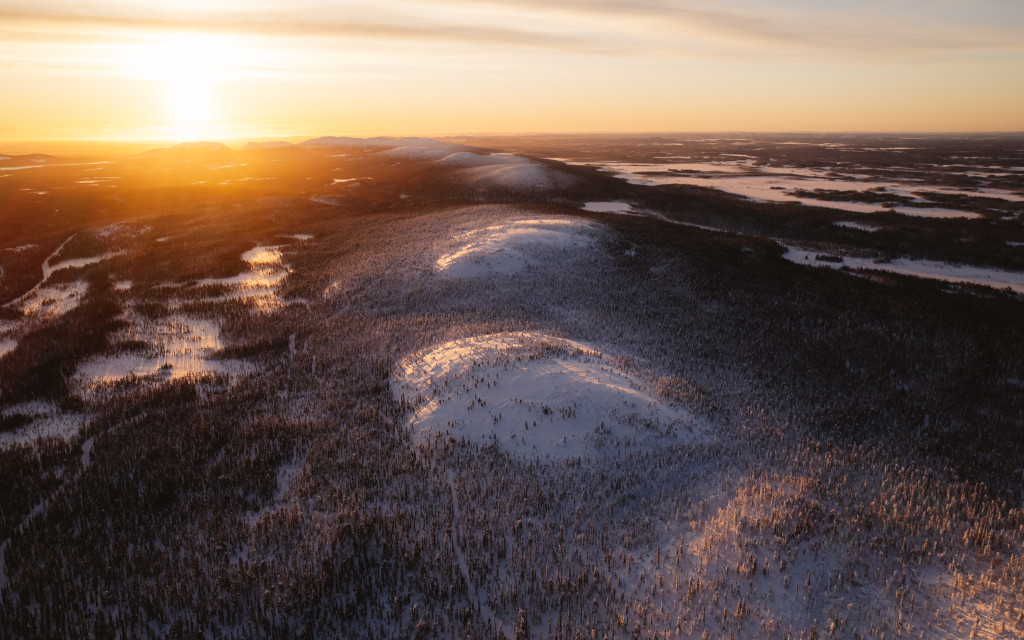
The core of Pyhä-Luosto National Park is formed by Finland’s southernmost fell range, which is 2 billion years old. The southernmost part of the chain, Pyhätunturi, is characterized by steep slopes covered with sharp-edged boulder fields and deep gorges. These gorges were carved by meltwaters during the ice ages and divide the fell ridge into separate peaks. The fells consist mainly of metamorphic rocks, conglomerates, and quartzites.
History of Pyhä-Luosto and Its National Park
The national park has a long and meaningful history. Pyhätunturi National Park was established in 1938, and in 2005 it was expanded to include the nearby Luosto area, forming today’s Pyhä-Luosto National Park. Long before this, the region was an important settlement area where people hunted, fished and gathered natural resources from prehistoric times onward.
The forests southwest of Ukko-Luosto and Lampivaara have remained untouched by the large-scale logging of the 19th and early 20th centuries, and some of the trees are now up to 400 years old. Luosto is famous for its impressive old pine forests, while Pyhätunturi is known for its remarkable geology and the history of the Forest Sámi who once lived in the area.
For the Forest Sámi, Pyhätunturi was—just as its name suggests—a sacred fell. According to oral tradition, they visited places such as the Uhriharju seida to ask the local spirits for good hunting luck, offering parts of reindeer or wild forest reindeer as gifts. Pyhätunturi was an important hunting ground for wild forest reindeer and later became a centre for reindeer herding.
Today, Pyhä-Luosto National Park serves many purposes: nature conservation, local livelihoods, outdoor recreation and sustainable tourism. It remains a place where ancient traditions, geological wonders and modern nature experiences meet.
National park services, trails, activities and visitor centre